
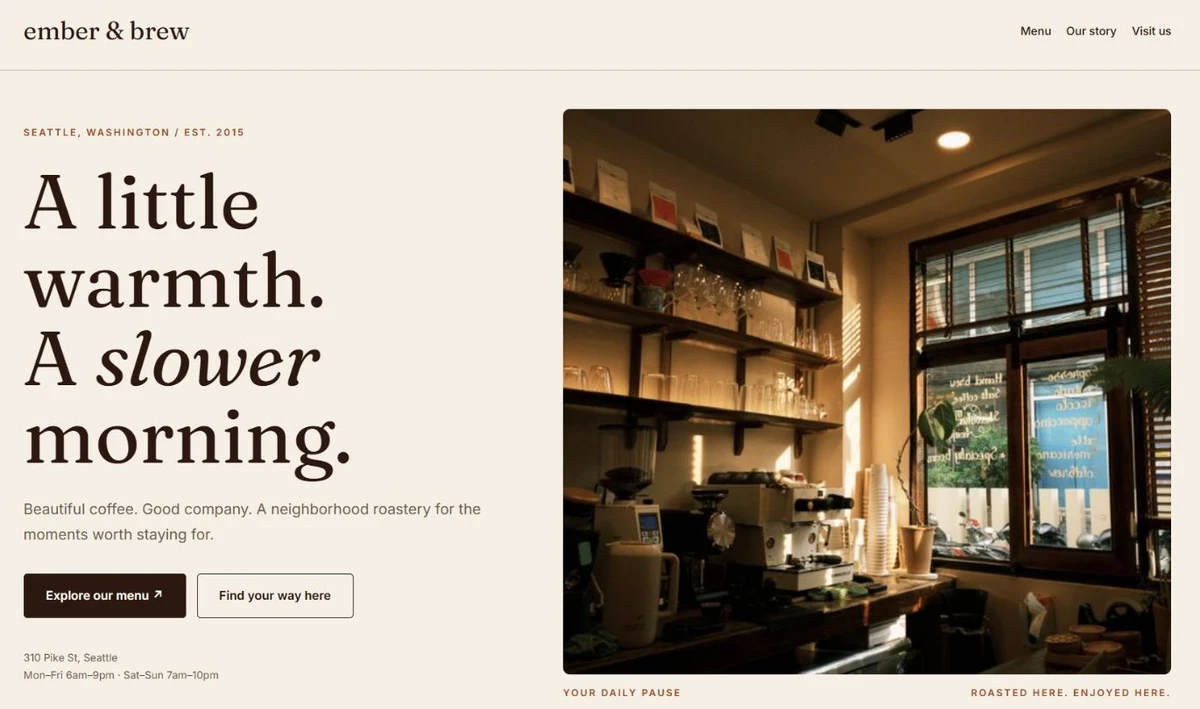
 A brief becomes a real page.
Build with WPBakery
Edit supported WPBakery layouts, local templates, and page CSS.

Video coming soon
Your next step is ready.
Follow the complete written guide below.
The video will join it here when it’s ready.
Before you start
- EMCP Pro and a verified AI connection.
- WPBakery 9.0.1–9.0.x.
- A practice site and a draft page.
Let’s do this, step by step.
Step 01
Select and save the builder
Open Setup → Page Builders. Select WPBakery under 1. Standalone builder. Choose Save changes. A Not detected card lists missing requirements.
Start with the required plugin or theme active. Select this builder and click Save changes. This does not convert existing content.
Step 02
Enable the actions and reconnect
Open Setup → Tools → WPBakery. Inspect read and write switches; enable the actions needed for this practice task, then Save changes and reconnect your AI app.
Open this integration’s Tools tab. Check both read and write actions; Pro read tools can also start off on a fresh install. Save your choices and reconnect the app so it reads the updated list.
Step 03
Inspect before building
Ask the AI to read WPBakery's context, supported element controls, and existing design settings.
Ask what this installed version can actually edit. Seeing an element in the catalog does not always mean EMCP can create or change it.
Step 04
Inspect supported elements
Read the installed shortcode elements and which ones are supported for authoring.
WPBakery layouts are built from shortcodes. Let the AI inspect their real settings rather than inventing names.
Step 05
Build or adapt a draft
Create a native draft with verified rows, columns, text, images, and buttons. Inspect a local template before applying it.
Applying a template replaces page content in this workflow. Use a draft whose contents you intend to replace.
Step 06
Refine and check recovery
Make one unique fragment change or page CSS adjustment, then inspect the recovery snapshots.
A fragment must match exactly once. If the layout changed meanwhile, read it again. The snapshots include content and page styles.
Step 07
Review before publishing
Inspect the native backend editor and frontend, then publish only after review.
Saving content on an already published page can affect visitors immediately. Using a draft gives us a separate review boundary.
Step 08
Read back and preview
Read the saved page again. Open the native editor, then inspect the frontend at desktop and phone widths.
Check the saved content, editing controls, images, and links. If a newer edit is detected, read it before trying again. A save response alone does not prove the page looks right.
You’re done when…
The WPBakery result remains natively editable and the intended save/publication state is verified.
Keep the reference handy.
The docs cover tool details and requirements for this lesson.
You only need the guide for the app or builder you use. Ready to build? Try an Elementor draft or use Gutenberg.