
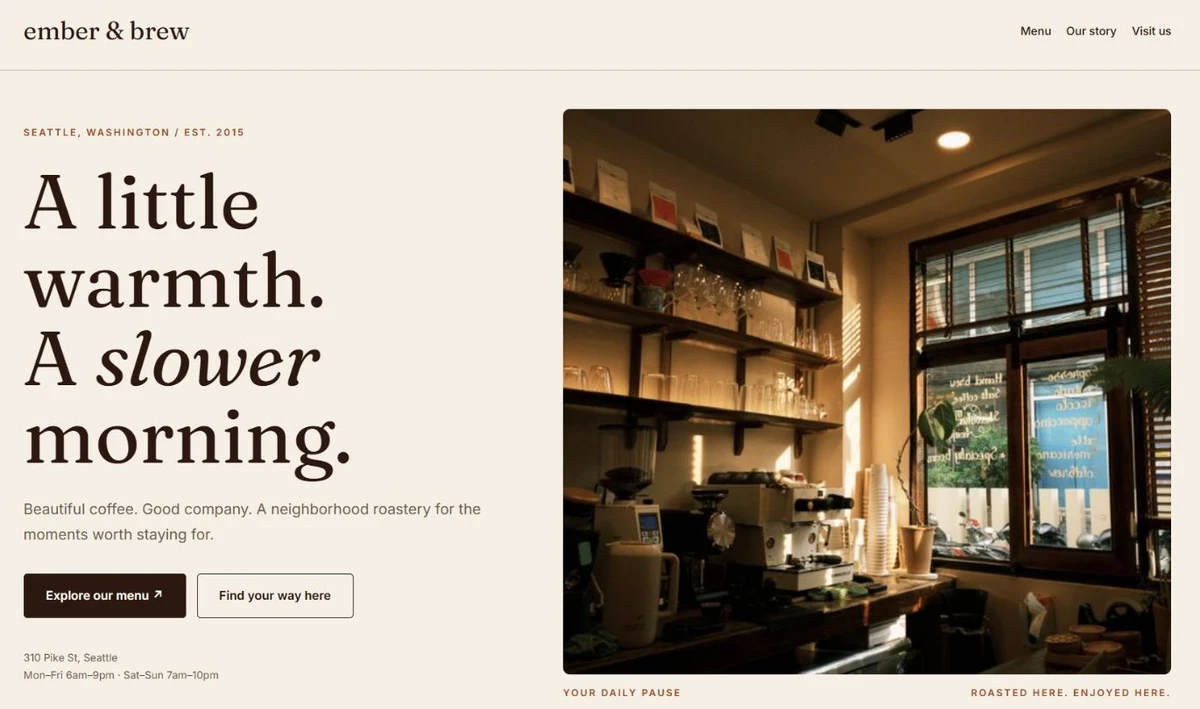
 A brief becomes a real page.
Edit a page without rebuilding it
Inspect an existing layout, change one element, and verify the saved result.

Video coming soon
Your next step is ready.
Follow the complete written guide below.
The video will join it here when it’s ready.
Before you start
- A verified AI connection.
- Elementor active and selected in Page Builders.
- A practice site or draft page.
Let’s do this, step by step.
Step 01
Identify the page
List pages, select the exact draft ID, and read its page snapshot and structure.
Page titles can repeat. Confirm the site, page ID, and draft status before editing. A snapshot describes saved content; it is not a picture of the page.
Step 02
Find the exact element
Ask the AI to find the heading or container and inspect its accepted settings.
The AI should use the existing element ID. Reading its settings first avoids guessing field names that may save without changing anything visible.
Step 03
Review and save one change
Approve one before-and-after text change, then have the AI update that element.
Keep the layout and other content unchanged. For several related edits, the AI can group updates, but each one should still name an existing element.
Step 04
Check the editor and link
Read the updated setting back and open the preview. Test any affected button or anchor.
If an anchor is broken, inspect the actual container ID control. Do not assume a field called css_id applies to every Elementor element.
Step 05
Handle stale styles
If saved settings are correct but the preview is stale, inspect caches. Enable page-scoped regenerate-css only if needed.
Regenerating CSS asks Elementor to rebuild styles on the next visit. It does not change the content or clear every hosting cache. Avoid a site-wide reset for one page.
You’re done when…
The original page ID remains the same, and the intended element alone has changed.
Keep the reference handy.
The docs cover tool details and requirements for this lesson.