
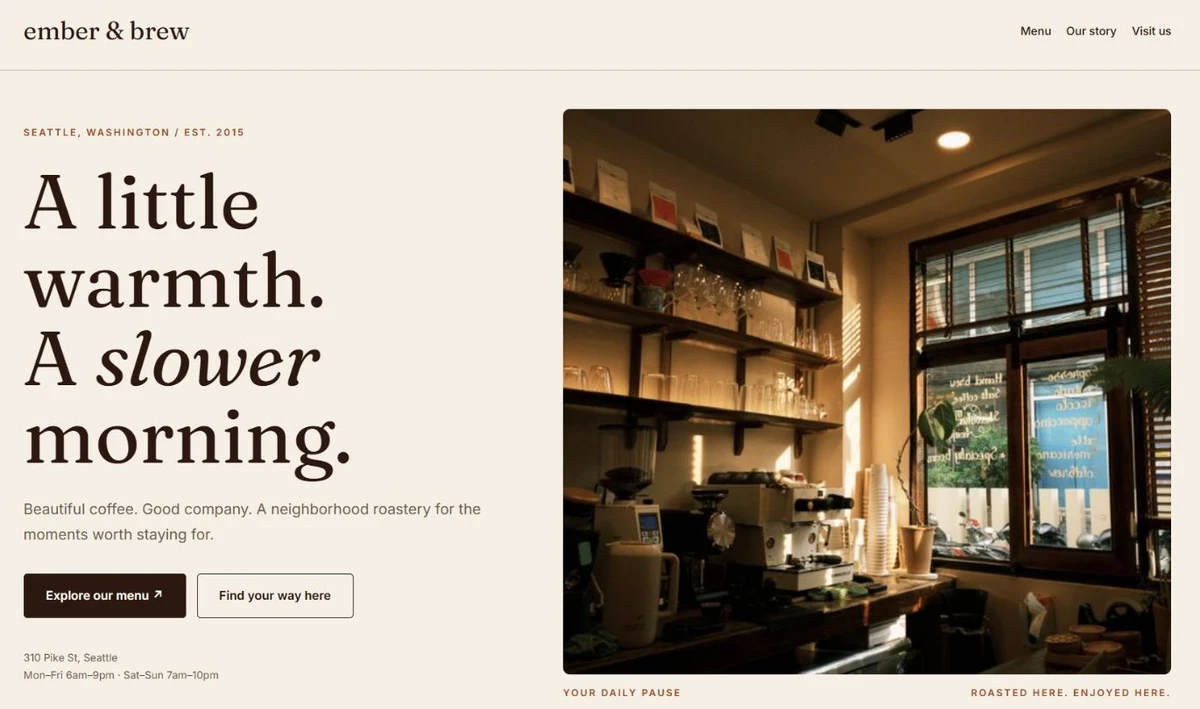
 A brief becomes a real page.
EMCP Academy
A little guidance.
A lot you can build.
Learn to work with WordPress and AI, one clear step at a time. Start with setup, build your first page, and go further when you’re ready.
Written lessons ready now. Video walkthroughs coming soon.








Your next step starts here
Make yourself at home.
New to EMCP? Start at the beginning.
Already connected? Choose what you want to do.
No lessons found
Try a different word or choose “All paths.”
Essentials
Start here
Install EMCP and get ready for your first task. Follow these lessons in order.
Start here: what EMCP does
Understand how your AI app connects to WordPress and choose your learning path.
Install EMCP Free and Pro
Install the right plugin, activate Pro if you have it, and verify your dashboard.
Find your way around the EMCP dashboard
Find setup, building tools, libraries, and recovery options in the new dashboard.
Connect an AI agent: the complete setup path
Prepare WordPress, choose your app, sign in, and verify the first request.
Choose your builder and available tools
Set up the builder, modules, and tool access needed for your task.
Choose your app
Connect your AI app
Choose the app you use. You only need to complete its matching setup lesson.
Connect Claude Desktop
Choose the one-click bundle or browser sign-in, then test your connection.
Connect Claude Code
Add the WordPress server from the terminal and complete browser approval.
Connect Cursor
Add EMCP to the right Cursor project and verify which WordPress site it reaches.
Connect Codex
Connect Codex to WordPress using its MCP configuration and verify the site.
Connect an AI assistant in VS Code
Add the server to your installed VS Code MCP integration and test discovery.
Connect Antigravity
Use the browser sign-in bridge and a compact tool list.
Connect OpenClaw
Add EMCP, complete sign-in, and handle the Windows connection options.
Connect Hermes
Configure EMCP in Hermes and reload the connection.
Connect a local WordPress site
Choose between the local WP-CLI bridge and a local proxy for a remote site.
Practical projects
Build your first pages
Turn a clear brief into an editable draft, then review and improve it.
Build your first Elementor page
Create one editable draft, check it on mobile, and make one focused improvement.
Edit a page without rebuilding it
Inspect an existing layout, change one element, and verify the saved result.
Write a useful brief and use the prompt library
Adapt a sample prompt using real content and a clear review boundary.
Reuse sections and templates
Find existing work and adapt it into an Elementor draft.
Set brand colors and fonts
Use Brand Kits and global styles with a clear understanding of their site-wide effect.
Add images and icons that belong on your page
Use your own media or stock images, add accurate descriptions, and review optimization.
Build and edit with the WordPress block editor
Create a draft from native blocks and keep it valid in Gutenberg.
Use Elementor atomic elements and shared classes
Recognize the newer element system and make a small native edit.
Choose your builder
Your page builder
Follow the native workflow for your installed builder. These are alternative paths.
Build with Bricks
Create a native draft and reuse existing Bricks design styles.
Build with Breakdance
Build a nested native layout and adjust responsive settings.
Build with Avada Builder
Build a native Avada draft using available content and elements.
Build with Divi 5
Create a Divi draft and scope a Theme Builder layout deliberately.
Build with Thrive Architect
Create and refine a native Architect landing-page draft.
Build with Oxygen 6
Build reusable Oxygen content, review template matching, and inspect recovery options.
Build with Kirki 6
Stage a Kirki canvas and publish only the reviewed version.
Build with WPBakery
Edit supported WPBakery layouts, local templates, and page CSS.
Build with Beaver Builder
Stage native rows and modules, reuse a detached template, and review publication.
Build with Visual Composer
Stage an editable layout together with matching frontend content.
Build with BeTheme and BeBuilder
Build with native sections and wraps while keeping theme options separate.
Block editor
Gutenberg block packs
Add native sections and patterns using the block plugins on your site.
Build with Spectra
Add a Spectra section without disturbing the surrounding blocks.
Build with Kadence Blocks
Find and adapt a Kadence Design Library pattern.
Build with GenerateBlocks
Create a styled GenerateBlocks V2 section.
Build with Blocksy Blocks
Embed a reusable Blocksy Content Block in a Gutenberg draft.
Build with Otter Blocks
Build an Otter draft and regenerate its page styles.
Everyday workflows
Manage your website
Work with content, navigation, forms, store products, and site settings.
Manage posts and pages
Create a content draft, organize it, and update the intended record.
Create and update navigation menus
Build a menu, assign it deliberately, and test its links.
Change theme settings with your AI
Inspect the active theme and follow the matching Astra, Kadence, GeneratePress, or Blocksy route.
Manage plugins, themes, and user profiles
Inspect the site inventory and make small, deliberate administration changes.
Review forms and their submissions
Inspect an existing form, check notifications, and manage a test submission.
Update SEO titles and social previews
Change stored metadata and check what the public page actually renders.
Check page quality, speed, and security reports
Run read-only checks and turn the findings into specific follow-up tasks.
Fix broken links and add redirects
Find an old URL, choose a destination, and test the redirect.
Work with custom fields
Discover an existing content model and update values through ACF or Meta Box.
Manage WooCommerce products and store information
Inspect the store and make a reviewed content change on a draft product.
Import products from a document
Turn a small source list into a validated WooCommerce import.
Inspect and build a FunnelKit funnel
Inspect a funnel, prepare its steps and checkout products, then review the complete journey.
Translate a page with Polylang
Create a linked translation draft and review its text without changing the original page.
Translate a page with TranslatePress
Translate the text visitors see and review shared strings across the site.
Build and edit a TablePress table
Turn a small data set into an editable table and place it on a draft page.
Advanced
Go further
Reusable designs, multiple sites, recovery, automation, and developer workflows.
Give your AI the EMCP playbooks
Install or load the skill that matches the task.
Help your AI remember the site
Set site context and approve useful memory for later sessions.
Use AI Chat inside WordPress
Configure a provider and make one checked change from the editor.
Use Elementor addon widgets
Discover installed addon widgets and keep template ownership clear.
Use Elementor templates, dynamic tags, and popups
Prepare reusable Elementor Pro content and review where it appears.
Build headers, footers, and dynamic templates
Use EMCP Themer with the builder already on your site.
Build a post grid or carousel with Themer
Design one reusable post card and repeat it in a responsive grid or carousel.
Create a reusable Elementor widget
Validate a structured widget design and inspect it before use.
Review custom blocks and PHP snippets
Create a small Sandbox artifact and follow its review and activation process.
Export your Sandbox elements as a plugin
Package reviewed custom elements so they can run when EMCP Tools is deactivated.
Add a small CSS or JavaScript enhancement
Choose page-level or site-wide code intentionally and verify its effect.
Add a restrained GSAP animation
Enable the animation module and test one accessible page effect.
Review changes and recover earlier content
Use the right recovery method for the change you need to undo.
Back up and restore a WordPress site
Create a portable backup and practice restoring it on a test destination.
Move a local or staging site to a new server
Pair a source and destination, transfer the site, and verify the result.
Send selected changes to a live site
Choose content sync or a deliberate file/table sync without confusing the scopes.
Save reusable work to Cloud
Back up Sandbox artifacts, import them on another site, and understand settings sync.
Manage multiple sites from one AI app
Configure named sites in the local proxy and confirm the destination before each task.
Connect an entire workspace through the gateway
Connect sites to Cloud and target them through one hosted connection.
Inspect files, the database, and WP-CLI jobs
Use advanced administration tools on a test site with a bounded task.
Extend EMCP with hooks and a custom tool
Prepare a small developer extension with explicit permissions and a testable result.
Prepare FunnelKit automations and broadcasts
Build an inactive automation and review a broadcast before anything is sent.
Troubleshooting
Find a fix
Pick the symptom you see and work through the checks in order.
Connected, but no tools appear
Find whether the problem is connection, discovery, or one unavailable integration.
Fix sign-in and permission errors
Work through browser approval, Application Password, and access failures.
Fix disconnects and session errors
Reconnect cleanly and check the local bridge or proxy route.
Fix a catalog that is too large
Compare the full tool list with Compact mode using the same account and app.
Fix a stalled backup upload
Check host limits and use the server upload folder when necessary.
Resolve license, missing-feature, and saved-layout issues
Check the correct dependency before escalating a problem.
Find a failed connection or tool call in MCP Log
Use the request log to identify where a connection stopped and prepare useful support details.
A quick answer, or a deeper read?
Explore the full documentation or watch existing community tutorials.
Progress is saved in this browser. No account needed.