
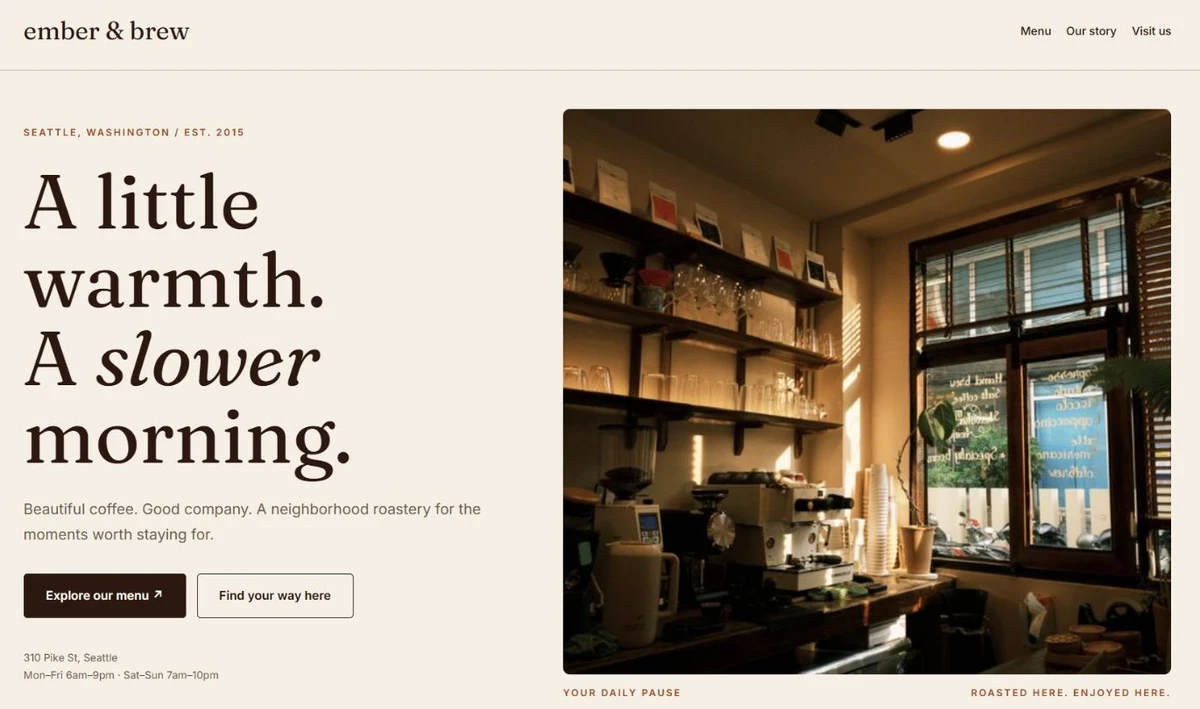
 A brief becomes a real page.
Build headers, footers, and dynamic templates
Use EMCP Themer with the builder already on your site.

Video coming soon
Your next step is ready.
Follow the complete written guide below.
The video will join it here when it’s ready.
Before you start
- A verified connection and a practice site.
- Themer module enabled.
- A supported builder; Pro for granular targeting, exclusions, priorities, or extra templates.
Let’s do this, step by step.
Step 01
Enable and open Themer
Open Setup → Modules → Content & design. Enable Themer, then Save modules. After the reload open the separate EMCP Themer WordPress menu or the card’s Configure link.
Themer starts off on new installations. Switch it on and save the modules. Its own menu then appears in WordPress. Open it to inspect existing templates.
Step 02
Choose one template type
Create a practice header or footer and build its content on the returned template ID.
Start with one region. Use the live logo, site title, or menu elements so the template can reflect the site's content.
Step 03
Set display conditions
Inspect available condition targets and assign the narrowest appropriate test scope supported by your plan.
Free and Pro offer different targeting choices. On a practice site, verify the chosen scope before allowing it onto real pages.
Step 04
Check the winner
Use resolve-template for a target page and inspect the frontend.
Themer chooses one template per region. Confirm which header, body, and footer win instead of guessing from the list of templates.
Step 05
Build a dynamic body template
For a single or archive layout, use the appropriate title, content, image, and archive elements.
A template should show the currently viewed content. Check more than one post or archive, including pagination where used.
Step 06
Bind fields deliberately
List dynamic sources and choose a compatible source for a classic widget or Gutenberg attribute.
Text, image, and link sources are different types. Atomic Elementor controls do not have this documented binding path.
Step 07
Review coexistence
Check for overlap with another header/footer system and inspect both matching and non-matching pages.
A body-only template normally keeps the theme header and footer. A complete Themer header, body, and footer can take over the whole document.
Step 08
Keep PHP templates as an advanced branch
If a PHP template is needed, have the AI create a validated draft, inspect it under Themer → PHP Templates, and select it manually on the intended template.
The AI cannot attach a PHP template through a tool. The human selection is the execution step, so review the code and fallback content first.
You’re done when…
The intended regions and conditions resolve correctly across representative pages.
Keep the reference handy.
The docs cover tool details and requirements for this lesson.